
Traditional Outdoor Sauna FAQ
At Sauna Friend, we're Denver-based wellness contractors specializing in traditional and outdoor sauna installations — handling everything from the initial site consultation all the way to a fully working sauna on your property. We've put together this FAQ to help you walk into that first conversation informed and confident, so we can spend less time on the basics and more time designing something that's exactly right for your space, your goals, and your lifestyle.
Planning & Site Preparation
Where should I place my outdoor sauna?
Choose a flat, level surface — a concrete pad, deck, or compacted pavers work best. Avoid soft or uneven ground, which can cause the structure to shift over time. Think about the view from inside: consider facing the sauna toward a garden, mountain view, or natural privacy screen of trees. Also factor in proximity to cold-exposure options like a shower, cold plunge tub, or natural water — the hot-cold contrast dramatically enhances the sauna experience.
Do I need a building permit for an outdoor sauna in Colorado?
In most Colorado municipalities, including the Denver metro area, an outdoor sauna with electrical components requires a permit. Requirements vary by city and county — Aurora, Lakewood, Boulder, and unincorporated Jefferson County each have different thresholds. Structures over a certain square footage (often 120–200 sq ft) typically require a building permit. We recommend contacting your local building department or asking us — we've been through this process locally and can point you in the right direction.
Do I need to check with my HOA before installing an outdoor sauna?
Yes — this is one of the most commonly overlooked steps. If your property is governed by a Homeowners Association (HOA), you should review their CC&Rs (Covenants, Conditions & Restrictions) and submit an Architectural Review Request before purchasing or installing anything. HOAs in Colorado commonly regulate:
- Accessory structure placement and setback requirements
- Maximum structure height and footprint
- Exterior appearance, materials, and finishes
- Whether outbuildings or "sheds" are permitted at all
Getting HOA approval first prevents costly surprises. If you're unsure how to navigate the request, we're happy to help you prepare documentation.
How do I prepare the ground or foundation for my outdoor sauna?
The most common and stable base is a concrete pad or patio pavers set on compacted gravel. For barrel saunas, most come with adjustable feet that allow minor leveling on a firm surface. A treated wood deck is also acceptable if it can bear the load. Avoid placing a sauna directly on grass or dirt — moisture retention underneath will accelerate wood rot and compromise your structure.
Electrical Requirements
What electrical requirements does a traditional outdoor sauna need?
Most electric traditional sauna heaters require a dedicated 240V circuit with 40–60 amps, depending on heater size. This means two open slots on your main panel and a new dedicated line run to the sauna location. Installation cost in the Denver area typically ranges from $500 to $2,500 depending on panel capacity, distance from the panel, and whether conduit needs to be trenched or run above ground.
Do I need a licensed electrician for my sauna's electrical hookup?
Yes. Colorado requires a licensed electrician for 240V installations, and most sauna manufacturers require a professional install to maintain the warranty. We can refer you to trusted electricians in the Denver and greater Colorado area who have experience with sauna electrical work specifically.
What about wood-burning saunas — do they need electricity?
No. A wood-burning sauna requires no electricity at all, which makes it an excellent option for remote properties, off-grid locations, or areas where running new electrical lines would be cost-prohibitive. That said, you'll want to plan for proper chimney clearance (typically 2 feet above any surrounding structure), firewood storage close by, and the hands-on ritual of fire-tending — which many sauna enthusiasts actually prefer. Keep in mind that wood-burning saunas are not permitted in some HOAs or fire-restricted zones.
Materials & Construction
What wood is best for an outdoor traditional sauna?
For outdoor use, you want wood that resists moisture, temperature swings, and UV exposure. Top choices include:
- Nordic Spruce – The traditional Finnish choice. Tight grain, minimal resin, and a light, clean appearance.
- Western Red Cedar – Naturally rot-resistant and aromatic, with oils that repel moisture and bacteria. A popular choice in North America.
- Thermowood (heat-treated pine or spruce) – Thermally modified to be dimensionally stable and highly rot-resistant without chemical treatment.
Avoid cheap, untreated pine or mystery "import wood" — these will warp, crack, or rot within a few seasons, especially in Colorado's freeze-thaw cycle and intense UV environment.
What should I know about the roof and weatherproofing?
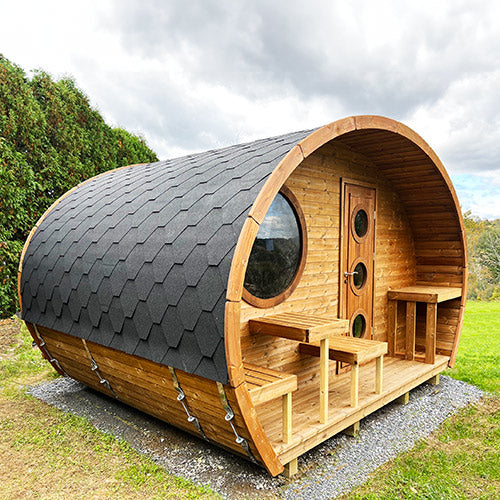
Not all barrel or cabin saunas come with proper roofing included. Before purchasing, confirm whether the sauna includes shingles, metal roofing, or a weatherproof rain jacket. Without adequate roofing, you'll face leaks, rot, and warped panels within a season or two. For Colorado, where snow loads can be significant, a solid roof with adequate pitch is especially important. Insulated wall panels also help retain heat and reduce the time and cost to reach temperature in cold weather.
How long does it take to assemble an outdoor sauna kit?
A pre-cut sauna cabin or barrel kit typically takes 1–2 days for two people to assemble, not counting foundation prep and electrical. If you want a professional installation, our team handles the full process — from site prep and assembly to electrical coordination and finishing. Most of our installations are completed within 1–3 days on-site.
Heater Selection
What kind of heater should I choose for my outdoor sauna?
There are three main options:
- Electric (most popular) – Reliable, easy to use, digital temperature control, and consistent heat. Ideal for busy households who want to heat on a schedule with no prep work.
- Wood-burning – Authentic and traditional. Produces a softer, more atmospheric heat that many enthusiasts prefer. Requires tending, wood storage, and is not suitable for all HOAs or fire zones.
- Gas – Less common, higher upfront cost, but a strong option for very large saunas where electric would require significant amperage.
How do I choose the right heater size?
A good rule of thumb for electric heaters is 1 kW per 45–50 cubic feet of sauna volume. For example, a 6×8×7 ft sauna (336 cubic feet) would need approximately a 6–7 kW heater. In Colorado's cold climate, it's wise to size up slightly — a stronger heater reaches temperature faster and can maintain heat more efficiently during winter months. We always help our customers right-size their heater selection as part of the purchase process.
What are sauna rocks and do I need a specific type?
Sauna rocks (called kiuas rocks or stove stones) sit on top of the heater and store heat, releasing it gradually for a smoother, more even temperature. You also pour water over them to create löyly — the steam that defines the traditional sauna experience. Use only heater-rated stones (olivine diabase, peridotite, or similar dense volcanic rock) — regular landscape rocks can crack or explode when heated. Your sauna heater will come with a recommended rock type and quantity.
Size & Capacity
What size outdoor sauna is right for my family?
Here's a practical guide based on use:
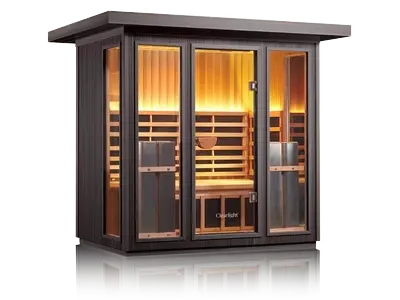
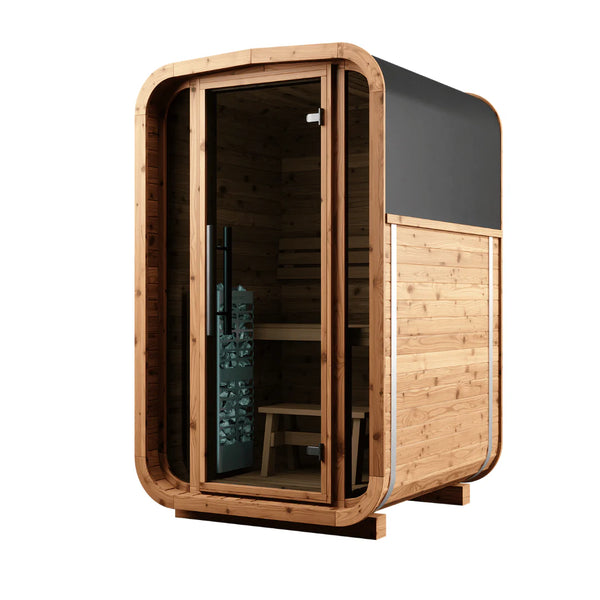
- 1–2 person (compact) – Great for solo or couples use. Saves space and energy, lower electrical demand.
- 3–5 person (most popular for families) – The sweet spot for most backyard installations. Fits a family comfortably for regular use.
- 6–8+ person (social/community) – Excellent for entertaining, group wellness rituals, or retreat settings. Requires more space, a larger heater, and longer heat-up time.
When in doubt, size up one step — you'll rarely regret having more room, and the additional heat-up cost is minimal compared to the added enjoyment.
What is the ideal ceiling height for a traditional sauna?
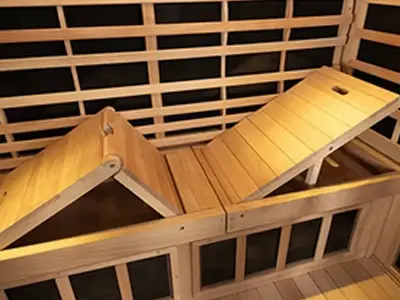
The upper bench should be positioned so seated bathers have their heads near the hottest air, typically 36–42 inches below the ceiling. Standard sauna ceiling heights run 6.5–7.5 feet. A ceiling that's too high pushes the hot air too far above the benches; too low and there isn't enough room to move comfortably. Most pre-built kits are engineered with correct proportions already built in.
Extras & Enhancements
Should I add a cold plunge with my sauna?
If space and budget allow, yes — a cold plunge paired with a sauna is one of the most powerful wellness combinations available. Hot-cold contrast therapy (also called contrast bathing) activates the lymphatic system, reduces inflammation, boosts mood through norepinephrine release, and dramatically deepens relaxation post-sauna. Even a simple cold shower nearby serves the purpose. A dedicated plunge tub or cold pool takes the experience to the next level.
What extras should I consider when planning my outdoor sauna?
- Ventilation – Essential for air quality and sauna longevity. Proper air exchange prevents mold and extends the life of the wood.
- Windows & ambient lighting – Creates atmosphere and connects you with nature. Consider the view and privacy when positioning windows.
- Exterior lighting – For safe evening access and a beautiful outdoor aesthetic.
- Changing/lounge area – A small outdoor bench, chair, or covered space to cool down and relax between rounds.
- Maintenance plan – Factor in annual cleaning, re-oiling exterior wood (for non-thermowood), and heater inspection.
Buying Smart
What should I look for when buying an outdoor sauna?
- Wood quality – Ask specifically what species and grade is used. Be cautious of vague terms like "premium spruce" without documentation.
- Roof and weatherproofing – Confirm what's included. Shingles, rain jacket, or metal roofing should be standard for outdoor use.
- Insulation – Especially important in Colorado's climate. Insulated panels reduce heat-up time and operating costs.
- Heater brand and warranty – Look for brands like Harvia, Tylö, Narvi, or Helo with established track records and parts availability.
- After-purchase support – Will the seller still be there if something goes wrong six months from now? Local dealers matter.
- Warranty coverage – Understand what's covered: structure, heater, electrical components, and for how long.
Does Sauna Friend offer installation services in Denver and Colorado?
Yes. We offer full-service outdoor sauna installation throughout the Denver metro area and greater Colorado, including site assessment, foundation guidance, sauna assembly, electrical coordination, and finishing. We're locals — we know the climate, the HOA landscape, the permit process, and what works here long-term. Reach out to speak directly with our lead sanctuary designer, David Drimmel, at 303-514-9465 or visit our schedule an install page to get started.
How much does an outdoor sauna installation cost in Denver?
Costs vary depending on sauna size, heater type, site conditions, and electrical requirements. As a general range:
- Sauna unit (2–4 person): $3,500–$8,000+
- Heater - $1250-$6,000+
- Electrical (240V dedicated circuit): $500–$2,500
- Professional assembly/installation: Varies by scope
- Foundation/site prep: $0 (DIY on existing concrete) to $1,500+ (new pad)
Contact us for a free consultation and site-specific estimate. We'll help you build a setup that fits your goals, your yard, and your budget.