Why humid Kansas City summers change how a sauna dries out
Kansas City summers commonly run 65 to 78 percent humidity, which changes how a sauna dries between sessions. What that means for ventilation, session spacing, and heater choice, separate from winterizing.
5.0 on Google across 80+ verified reviews
Kansas City summers commonly run 65 to 78 percent humidity in July and August, and that humid air is what a sauna must shed between sessions. When outside air already holds most of the moisture it can carry, a room drains slower, so ventilation, session spacing, and the heater's cool-down cycle decide how dry it gets before the next use.
This is a different problem than winterizing, and it deserves its own conversation rather than a footnote on the seasonal checklist.
The outside air is doing less work
A sauna dries the way a wet towel dries: moisture moves from the damp surface into the surrounding air, and keeps moving as long as that air can still take on more. In a dry stretch, the exchange is fast. In a Kansas City summer, it is not.
Summer humidity in the Kansas City metro comes from the Gulf: warm, wet air pushes north and settles over the region through stretches of July and August, holding relative humidity in that 65 to 78 percent range. When the outside air is already carrying that much moisture, it is close to its own ceiling, and a sauna's benches, floor, and interior wood are pushing moisture into air with little room left to receive it. A room that would air out in an hour on a dry October afternoon can sit damp for most of a July day.
Ventilation carries more of the job in a muggy stretch
In a dry climate, cracking the door and the vents after a session does most of the work on its own, because the air moving through is thirsty for moisture and pulls it out of the wood efficiently.
In a humid stretch, passive venting alone does less. Air coming in through an open vent is not much drier than the air already inside, so what matters is airflow itself: getting stale, saturated air out and replacing it, over and over, rather than trusting one open door to sort it out. That favors vents positioned for real cross-flow, upper and lower, over a single opening. It also favors leaving the door open longer after a session in a muggy week, and running a fan across the doorway when the room sits closed between uses.
Why the gap between sessions matters more
A room that gets a full dry-out window between uses resets. A room used back-to-back, or used again before it has finished shedding yesterday's moisture, does not.
That gap matters everywhere, but a humid stretch narrows the margin. If the room already drains slower, stacking sessions closer together compounds it: the next session starts on wood that never finished drying from the last one. Over a humid week that shows up as benches that feel damp hours after the heater is off, and a floor slower to dry than it used to be. None of that is a defect. It is what happens when the room's drying window gets used up by ambient humidity before the next session arrives. Widening that gap, or extending how long the door and vents stay open afterward, gives the room back the time the air is not giving it.
Heater choice and the cool-down cycle
The heater's job does not end when the session does. As the stones and the room cool, residual heat keeps driving some evaporation, which is part of what a good cool-down cycle is doing even after nobody is inside.
Two things connect to this. How evenly a heater distributes heat affects where moisture lingers: a room hot at the head and cool near the floor leaves a cooler zone where condensation collects and dries last, part of why Saunum's air-circulation approach is worth a conversation for a more even room generally, humid summer or not. And a Wi-Fi capable control such as Harvia's Xenio lets you run a short warm cycle after a session without standing at the room when it ends, which helps most when the outside air is not finishing the job for you.
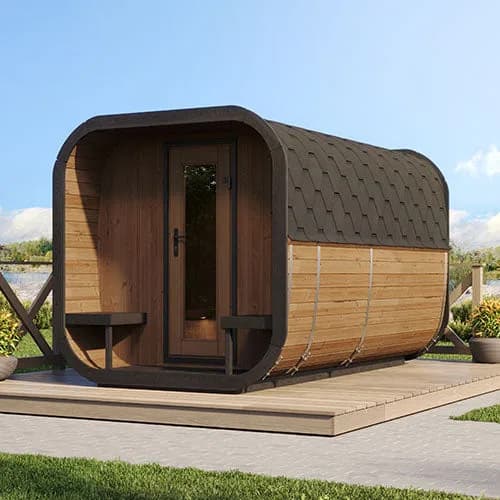
Sizing and configuration is a conversation with your specialist rather than a page. What works for a detached barrel in Lee's Summit and a covered patio build in Prairie Village are not the same answer.
Indoor rooms sidestep most of this
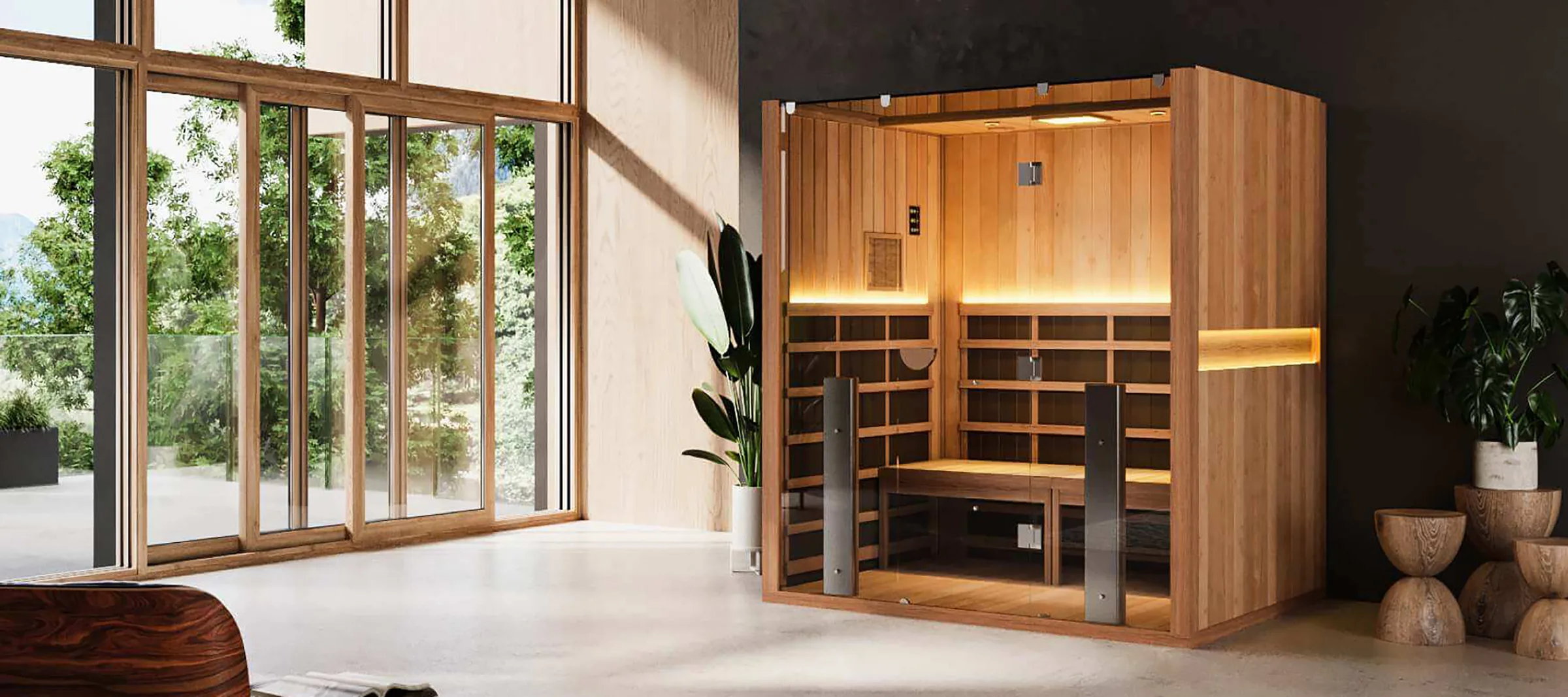
Kansas City housing stock comes with basements more often than our other markets do, and a finished lower level changes this conversation entirely. An indoor room sits in conditioned space, where the household's own climate control already manages humidity. That is one reason an indoor traditional room or an infrared cabin is worth a look for members choosing between formats here, alongside the pad and drainage questions covered on the Kansas City installation page.
An outdoor build is still the better experience for many households, and the humidity is manageable there too. It just asks more of ventilation, spacing, and the heater's cool-down cycle, the work a dry climate would otherwise do for free.
Frequently asked questions
Does a Kansas City sauna need different ventilation in summer than in winter?
The setup does not change, but how much passive venting alone can do does. Cold dry winter air pulls moisture out efficiently once a vent is open. In a humid July stretch the incoming air is already close to saturated, so real airflow, not just an open door, is what finishes the job.
How long should I leave between sauna sessions during a humid week?
Longer than you would in a dry stretch or in winter. There is no single number that fits every room and exposure, so your specialist works through spacing and post-session venting for your build during the consultation.
Does the heater I choose affect how well the room dries out?
Indirectly. How evenly a heater distributes heat affects where moisture tends to collect and linger, and a Wi-Fi capable control lets you run a short warm cycle after a session without being on site, which helps most when ambient air is not doing much of the drying on its own.
Is an indoor basement sauna a better fit for Kansas City humidity than an outdoor one?
It sidesteps the problem rather than solving it, since the household's own climate control is already managing the air. An outdoor room is still a strong choice for many households, and it simply asks more of ventilation and session spacing during the muggiest stretches.
Tell us the format, the placement, and what the site does after a storm, and we will tell you plainly what the humidity here is going to ask of it. Request member pricing, or call 720.780.4400 and start with the yard.
David Drimmel, founder
Sauna Friend Sanctuary Supply is family owned and operated, and an integrated auxiliary of Bioharmony Collective, a mission-driven ministry. More about how we came to work this way.