- Freeze and thaw cycling
- Front Range winters do not settle in and stay put. A bright afternoon in January can push a south wall above freezing and drop it back below after dark, over and over through the season. Water that has worked into wood expands every time that happens. Across years, that cycling is what opens joints, cups boards, and loosens fasteners. It is the single reason we push dimensional stability so hard in this market.
- High-altitude ultraviolet
- There is less atmosphere between a sauna in Boulder and the sun than there is almost anywhere else people live. Ultraviolet exposure grays untreated wood faster here, and it breaks down finishes faster too. A south or west elevation ages visibly ahead of the rest of a unit unless both the material and the protection schedule are chosen with that in mind.
- The case for thermally modified wood over cedar
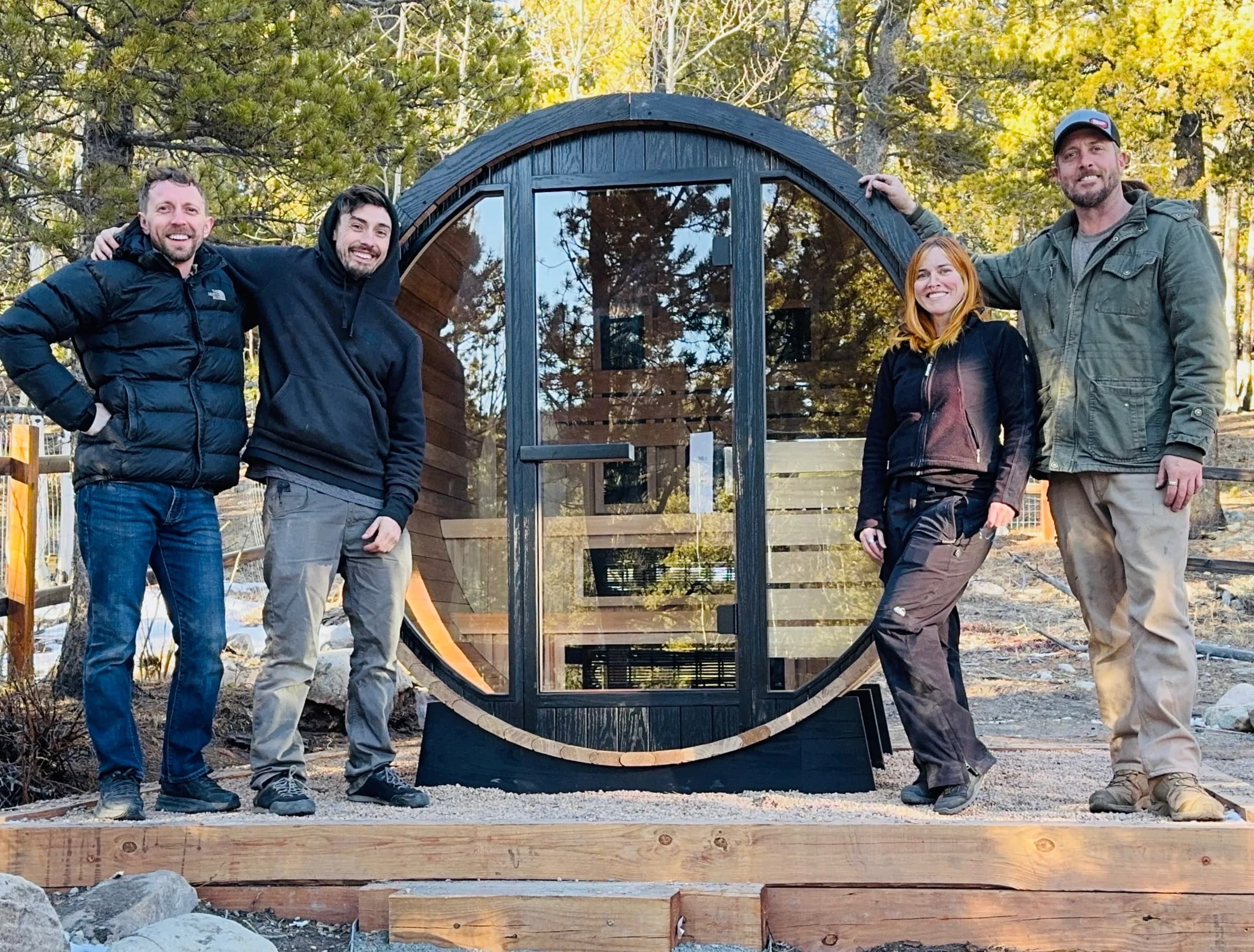
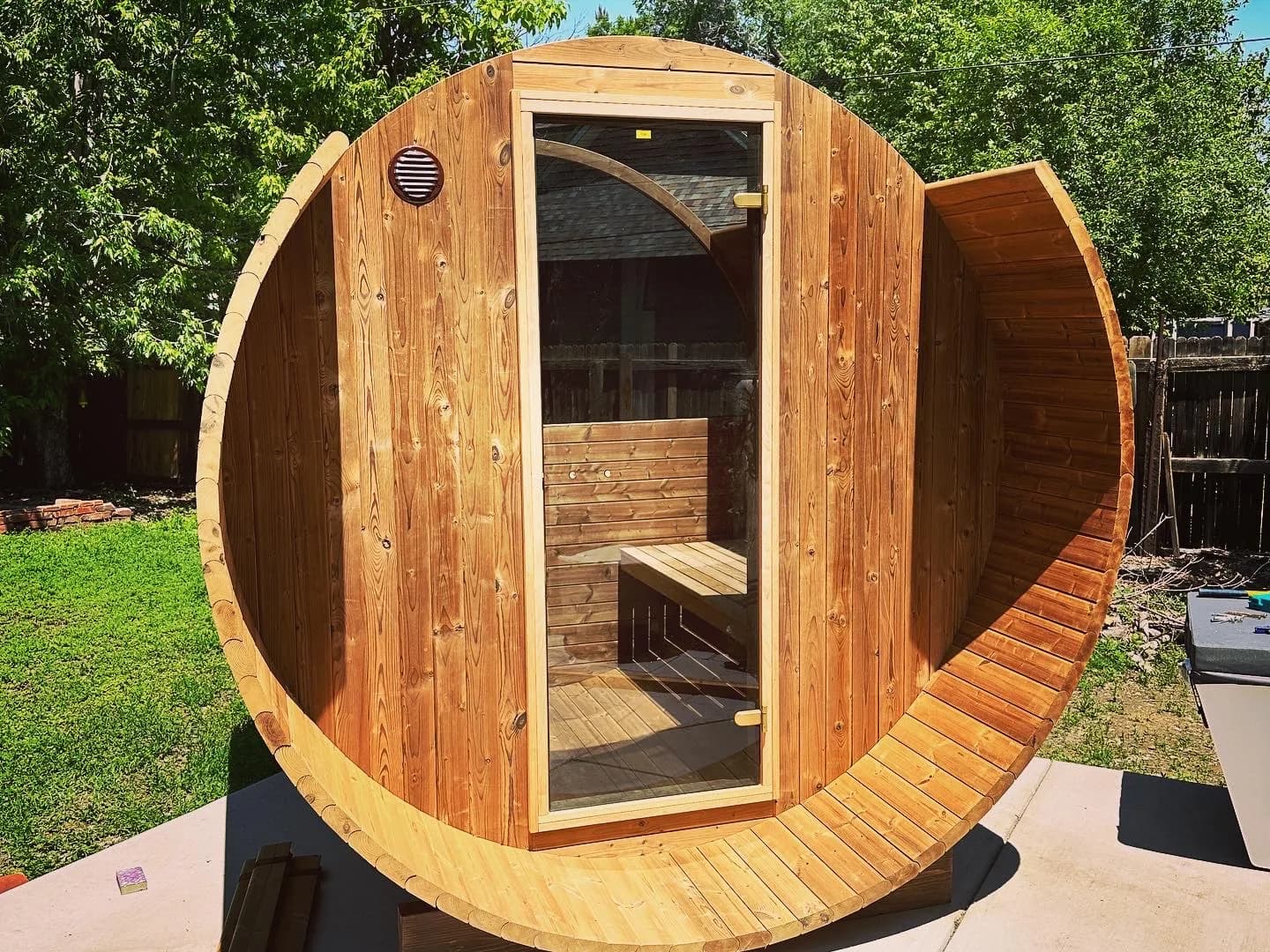
- Thermal modification changes the wood itself rather than coating it. The result is more dimensionally stable, more rot resistant, and better able to handle ultraviolet exposure and freeze and thaw cycling. Cedar is a good material and we still specify it, for indoor infrared and for sheltered outdoor placements paired with a maintenance plan. For an exposed Front Range back yard, thermally modified wood is the recommendation we give most often, and Thermory leads it.
- Snow, drainage, and access
- Three site questions come before any model conversation. Where snow comes off the roof and where it lands. Where meltwater goes once the pad is the flattest thing in the yard. And whether a freight truck can still reach the lot in March. We walk the site for those three before we talk about wood.
- Dry air is not the same as an easy climate
- Colorado's dryness gets credit it has not earned. Low humidity slows some kinds of decay, and it does nothing at all about ultraviolet exposure, wind, or the freeze and thaw cycle. Those are the forces that age an outdoor sauna here, and none of them are gentle.