Wood, weather, and the seasons your sauna lives through
Heat and weather go to work on every sauna ever made. What thermally modified wood changes, where cedar and basswood belong, and what protection means as a stage of the project rather than an afterthought.
5.0 on Google across 80+ verified reviews
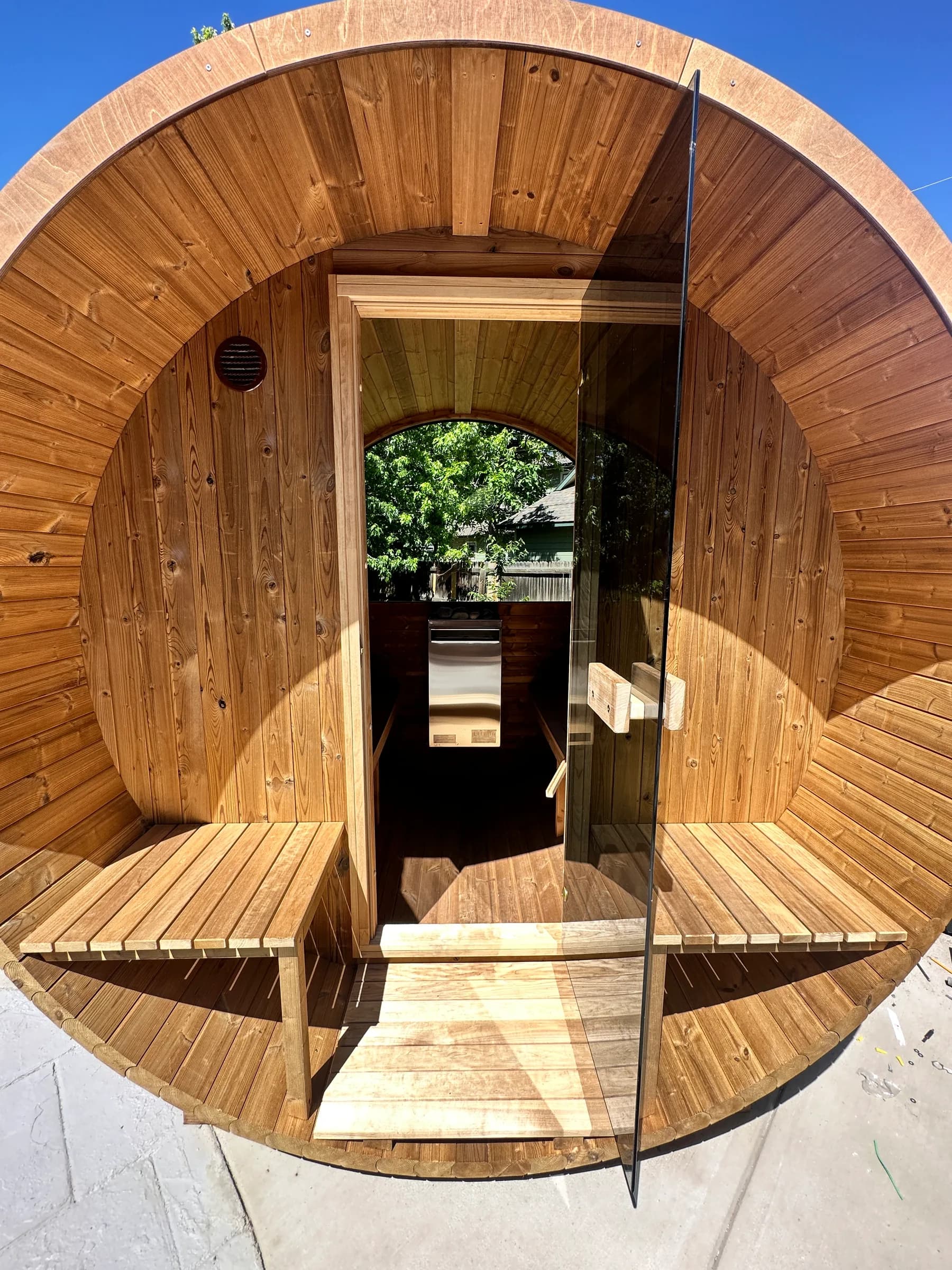
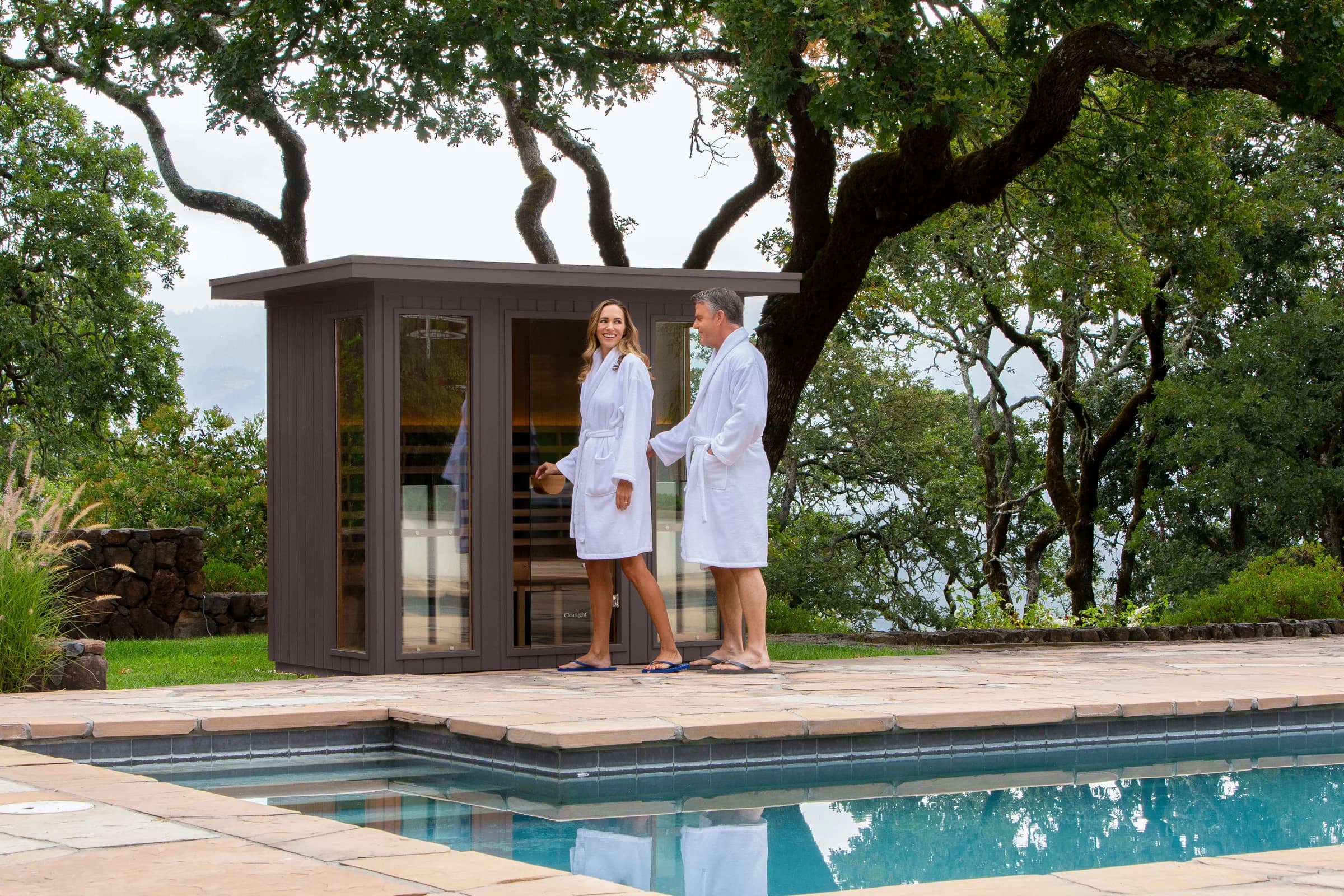
An outdoor sauna lives a strange life. Several times a week it goes from whatever the weather is doing to a room approaching 170°F, holds it, and then comes back down. Every one of those cycles is wood expanding and contracting, moisture moving in and out, and a finish standing between the two.
Heat and weather go to work on every sauna ever made. That is a property of the physics rather than a defect in anyone's manufacturing, and it is why we treat protection as a stage of the project with a person attached to it rather than as a bottle handed over on delivery day.
Wood is where you see it first
Before anything else fails, wood tells you what the site is doing.
Sun bleaches and grays exposed faces, and it does it unevenly, so the side that takes afternoon light ages faster than the side in shade. Moisture swells and shrinks boards, which loosens fasteners and can rack a door out of its frame over years. Freeze and thaw cycling is the harshest of the three, because water that gets in and then expands is doing mechanical work on the material from the inside.
None of that is dramatic in a single season. All of it is cumulative, and all of it is slower on some materials than others.
What thermally modified wood changes
Thermally modified wood outperforms cedar for outdoor use in Colorado. It is more dimensionally stable, so it moves less through the year. It is more rot resistant. And it handles ultraviolet exposure and freeze and thaw cycling better, which are exactly the two forces that dominate on the Front Range, where altitude sharpens the sun and the temperature can cross freezing twice in a day.
Thermal modification is the heat treatment behind that. It is applied to the wood before it is ever a sauna, and it changes the material rather than coating it.
That is why Thermory is our standing answer for Colorado outdoor exposure.
It is worth saying what this does not mean. Thermally modified wood is not maintenance free, and nothing outdoors is. It changes the rate at which weather wins, which over a decade is the difference that matters.
Where cedar belongs
Cedar has a real place, and the honest version of this conversation names it.
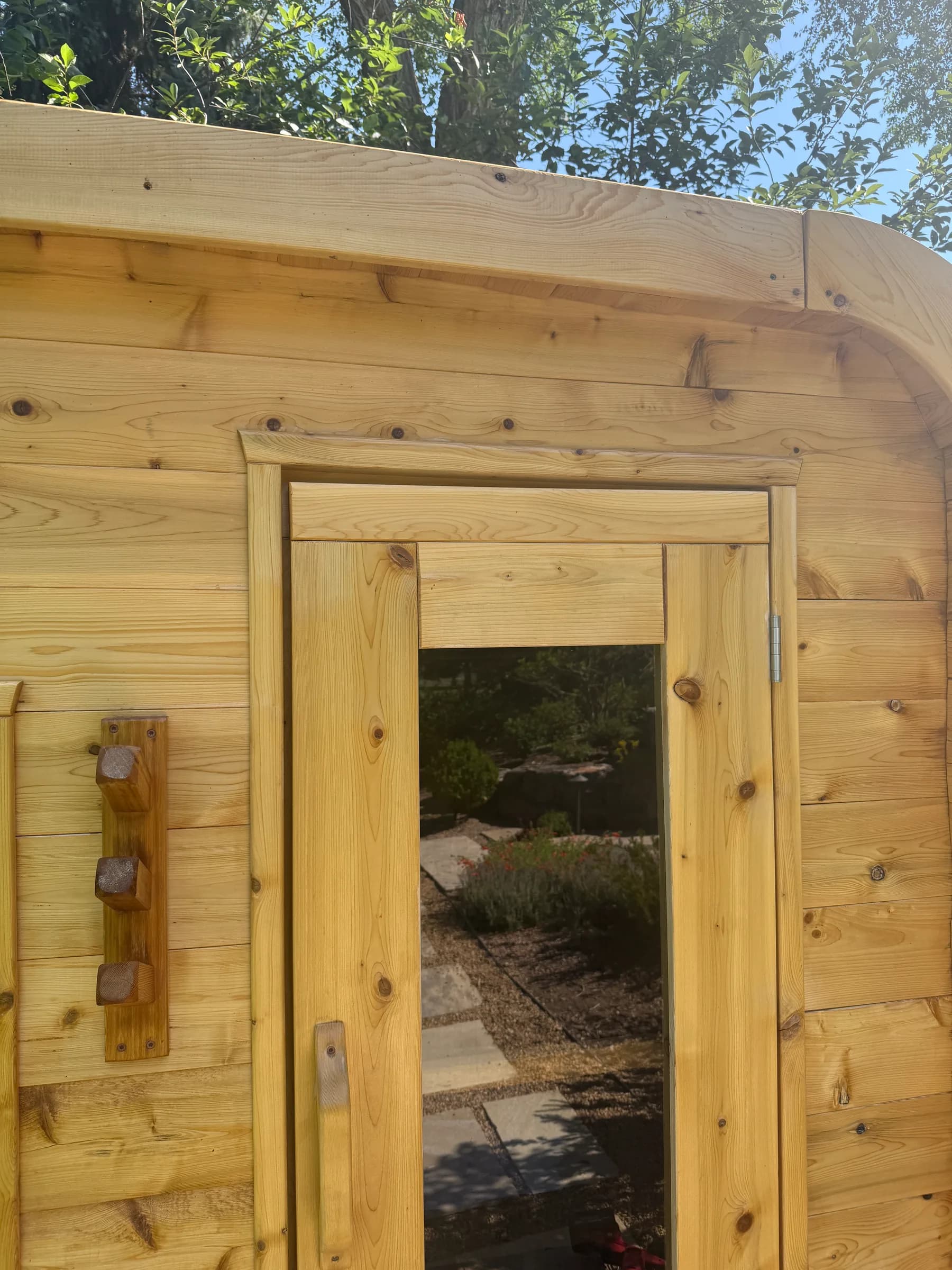
Cedar is appropriate for indoor infrared, where it is not exposed to weather at all and where its scent and softness are part of the experience. It is also appropriate for sheltered outdoor placement with maintenance: under a deep roof overhang, on a covered porch, in a mild climate, with someone willing to keep up with it.
In coastal Southern California, where conditions are mild and salt air is the variable worth naming, cedar outdoors is a legitimate conversation in a way it rarely is in Colorado. In the Kansas City metro, summer humidity and clay soil push the question back down to the pad and the drainage, because a room that stays damp underneath will show it above regardless of what it is built from.
Where basswood belongs
Basswood is the choice for members who are sensitivity prone. It is the hypoallergenic option, low in aromatic oils, and it belongs in the conversation whenever chemical sensitivity or allergy is a factor in the household.
That usually points a project indoors, toward Clearlight, which offers a choice of woods including basswood along with low EMF and ELF construction. If someone in the house reacts to cedar, say so on the first call. It changes the recommendation immediately, and it is a much easier thing to hear before a room is specified than after.
What protection means on our projects
Protection is stage six of our seven-stage service ladder, and it is a real deliverable.
It means climate-appropriate wood treatment applied for the seasons the unit will live through, chosen for your exposure rather than for a general idea of weather. A room in full afternoon sun at altitude and a room under a mature tree on a shaded north side are two different problems, and treating them identically is how one of them ends up looking tired early.
It also means the treatment happens as part of the build rather than being something you discover you were supposed to do. We would rather do it once, correctly, at the point where the wood is new and clean, than come back to a surface that has already started to go.
A seasonal rhythm worth keeping
None of this is difficult. It is mostly a matter of looking at the room a few times a year instead of never.
- Spring. Walk around it after the last freeze. Look at the base, the door seal and hardware, and any face that took winter sun directly. Clear whatever the winter piled against it.
- Summer. Watch the sun-exposed faces, which age fastest. Keep the space around the room clear enough to walk with a brush.
- Fall. Clear leaves and needles off the roof and out of anything that collects them. Check that water still leaves the pad the way it did when it was built.
- Winter. Keep the approach safe and the door clear. Snow piled against a wall is water sitting against a wall.
- Inside, year round. Let the room breathe after a session. Wipe the benches. Keep the floor able to dry.
We do not publish a re-treatment interval, because the honest one depends on your exposure, your material, and your climate. Your specialist sets that cadence with you for your site, and it is one of the things worth asking about on the call.
Water, snow, and the ground underneath
Most of what shortens the life of an outdoor sauna happens below the sightline.
Water has to leave the pad and move away from the room. Snow has to have somewhere to go that is not against a wall. Roof runoff from the house has to land somewhere that is not the base of the sauna. If any of those three are wrong, no finish on the wood above will save the situation, which is why site preparation and protection are really one subject looked at from two ends.
The year-three call
Something will eventually need attention. That is the nature of a structure that goes hot and cold outdoors several times a week for years, and it is true of every sauna ever made.
The question worth asking before you buy anything is who you call when it happens. Most owners discover their seller was a website. Our seventh stage exists for exactly this: service, guidance, and someone who picks up the phone in year three, in the same metro you live in.
If you are still choosing a room, barrel, cube, or cabin works through the format question, and material sits inside it. To talk through what your exposure is going to ask for, have us walk your space or call 720.780.4400.
David Drimmel, founder
Sauna Friend Sanctuary Supply is family owned and operated, and an integrated auxiliary of Bioharmony Collective, a mission-driven ministry. More about how we came to work this way.